
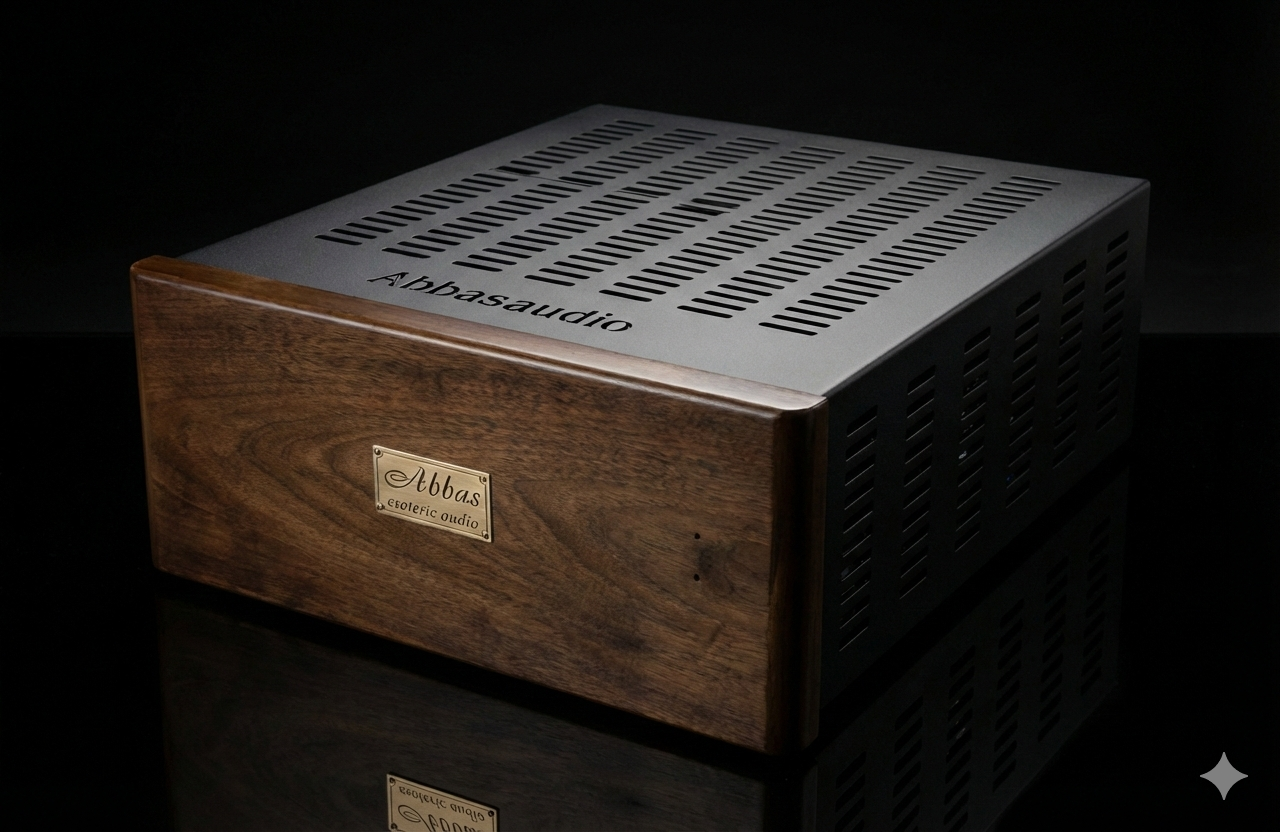
Psyche is a DAC model based on the TDA1541 that incorporates, to the greatest extent, the results of numerous experiments conducted over recent years. It represents a continuation of the 3.0–3.1–3.2 product line. The experiments included the development of optimal power-supply methods for the TDA1541 chip, the SPDIF receiver, and the current-to-voltage converter, as well as the design of the output stage. An optimal low-pass filter was also found, in order to resolve the main limitation of NOS mode—the increase of distortion with rising frequency and the need to find a compromise between filter complexity and impulse response. The resulting solution proved to be entirely non-standard.
As a result, the device incorporates a number of features that cannot be found in any other DAC based on the legendary TDA1541 chip. These features raise the musical performance of the digital-to-analog converter to a level unattainable by other implementations.
The SPDIF receiver WM8804 is officially rated for 24/192, but in hardware mode it actually works up to 24/96. Nevertheless, its use is absolutely justified — its jitter is quite low, and that can be clearly heard. The sound is more focused, the bass articulation is better defined. In choral recordings there’s less harshness and fewer intermodulation artifacts.
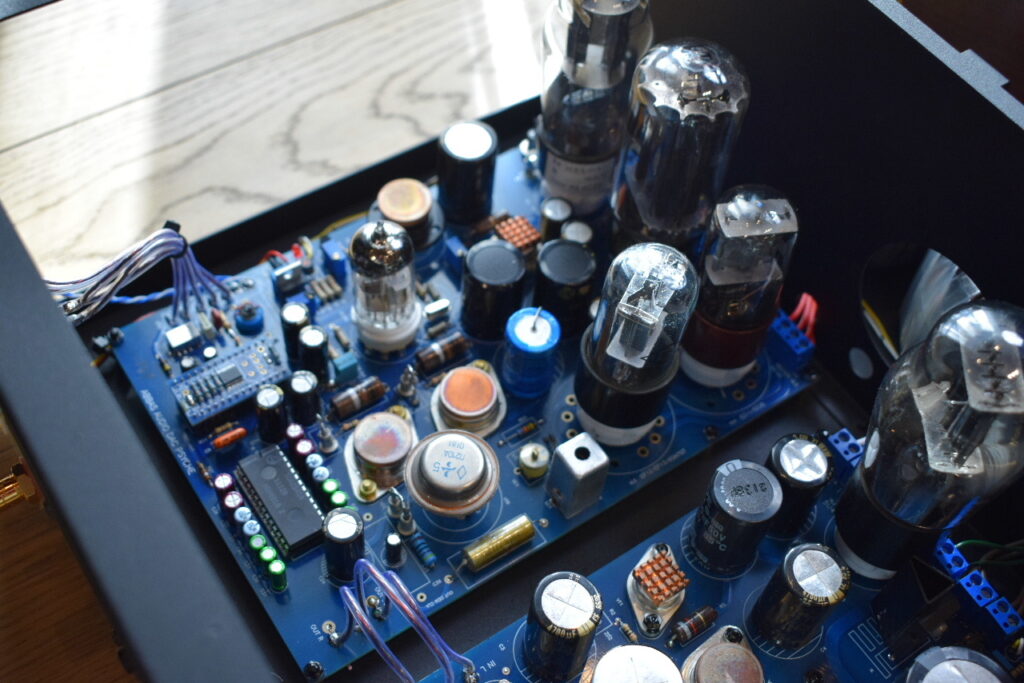
Another great advantage is that the Wolfson can be clocked from an external master clock . In the Psyche model, the receiver is controlled by a tube master clock operating at 12.00 MHz, based on E88CC dual triode. In this configuration, sound quality is further improved and can be fine-tuned by changing the tube. The tube type, manufacturer, year of production, and internal construction all influence the final result. To date, I have not found any other SPDIF receivers that offer comparable sound quality and similar capabilities.
There is, however, one small drawback: the Wolfson produces a click when switching between different sampling rates. Since I don’t use any additional mute circuits, the click can be heard. Still, I use this SPDIF receiver in my own reference home DAC JUPITER — and I have no intention of replacing it with anything else. With an external clock, the WM8804 provides sound quality that is not inferior to what can be achieved using an I²S connection. That’s why I stopped using the I²S interface in my home system, even though I had spent a lot of time designing complex tube followers and a separate power supply unit for it.
Additional features of Psyche include:
- SPDIF receiver powered by two voltage stabilizers
- A new powerful –15 V voltage regulator for the TDA1541 chip.
- A 5U4 tube rectifier in the –15 V supply rail.
This is a fully original solution that is not used by any other manufacturer in the audio market. Long-term experimentation has shown that the organization of the DEM cells power supply of the TDA1541 is the primary factor determining the sound quality of this chip. I have been refining TDA1541 power-supply designs for nearly thirty years, and each year new details emerge even in the simplest circuit topologies. This approach is the opposite of a technocratic one—endlessly complicating fundamentally unsuitable circuit solutions originally not intended for audio use.
All of my accumulated knowledge regarding TDA1541 power supply design is implemented to the fullest extent in my home reference DAC, which serves as a benchmark tool for music listening and comparative evaluation. It will be described separately.
- Another original solution is the tube DEM clock, which improves linearity at low signal levels and results in a more flexible, analog-like sound. It was first implemented in DAC 3.0 approximately ten years ago.
In Psyche, the DEM clock can employ EF13/EZ11, 6X5/6SN7, or any combination of these tubes. The selection is determined during assembly by installing the appropriate tube sockets.
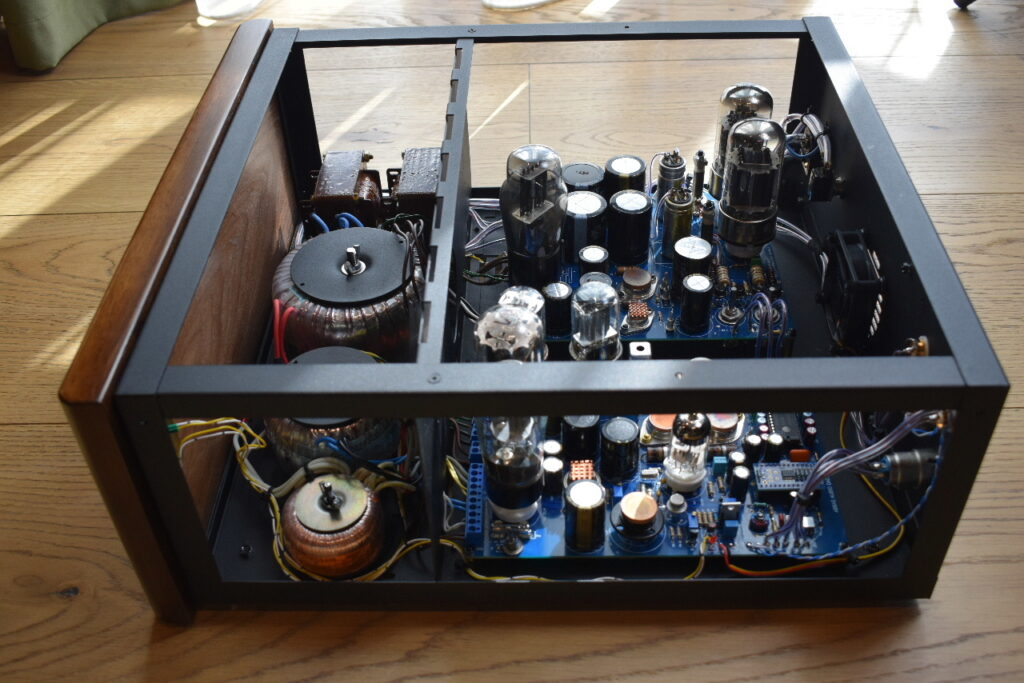
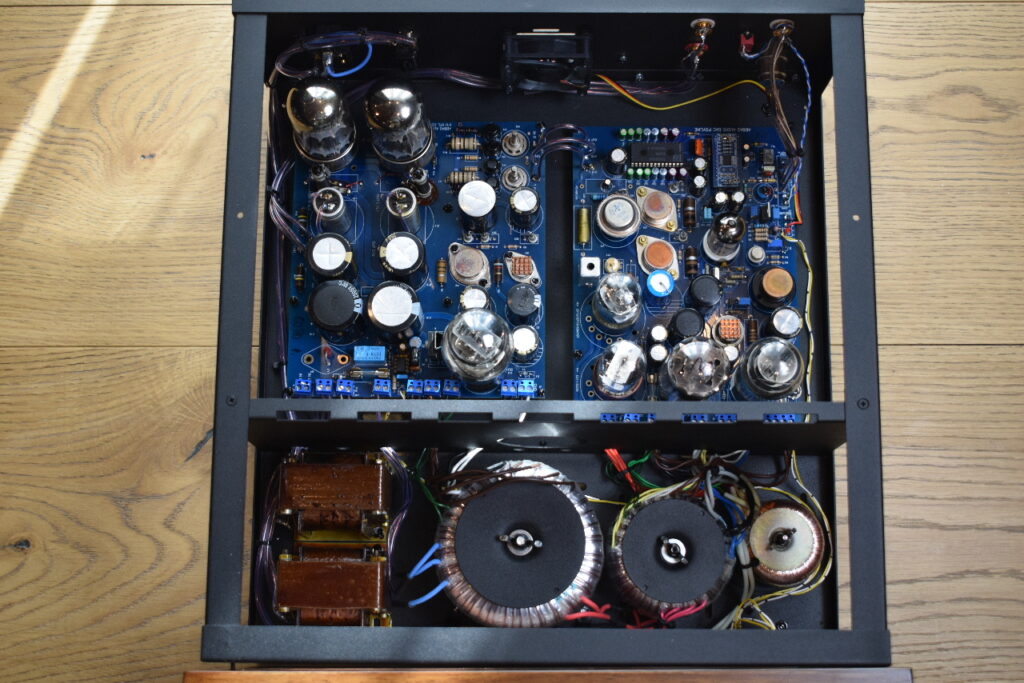
The analog section has also undergone significant changes. The current-to-voltage converter, based on high-frequency germanium transistors, is powered by a tube rectifier using a powerful 5U4.
Although this solution may appear technically unconventional, it follows a non-technical logic: it serves to balance the sonic characteristics of germanium transistors.
In the Psyche Signature version, a new low-pass filter is used. This proved to be a breakthrough solution, addressing the main limitation of NOS mode—the reproduction of frequencies above approximately 7–10 kHz. The method used to shape the frequency response differs substantially from conventional designs. It was discovered largely by chance and subsequently refined by listening, as adherence to traditional filter theory and textbook recommendations led to immediate degradation of sound quality.
The low-pass filter inductors are wound using vintage French wire on bamboo formers. This is a highly labor-intensive assembly, but it provides a significant performance advantage over all other DACs based on the TDA1541. Digital filtering renders the sound artificial and synthetic, while poorly designed analog filters suppress signal variability and its natural dynamics. An optimal solution to this complex problem has been identified.
The component base of the device has not changed significantly. It continues to use Black Gate capacitors, Audio Note resistors in the current-to-voltage converter, a combination of vintage and modern audio capacitors, germanium transistors, and the best diodes that were produced by the electronics industry.
The PCB traditionally has no mask on the bottom and is gold-plated. After assembly, it is coated with a varnish similar to that used for violins,which I prepare myself according to my own recipe.
The internal wiring composition has been improved. It remains an 18-strand multi strand cable, but with a significantly higher proportion of the best vintage copper conductors than before. The combination of different wire diameters and types yields a more balanced result. Over the past year, the stock of vintage copper wire has been substantially expanded, enabling further refinement of the wiring composition.
Particular attention continues to be paid to the phasing of all transformer windings and to the directionality of resistors, capacitors, and conductors within the unit. This is a fundamental requirement for sound quality. Directionality is considered the second most important factor after material quality.
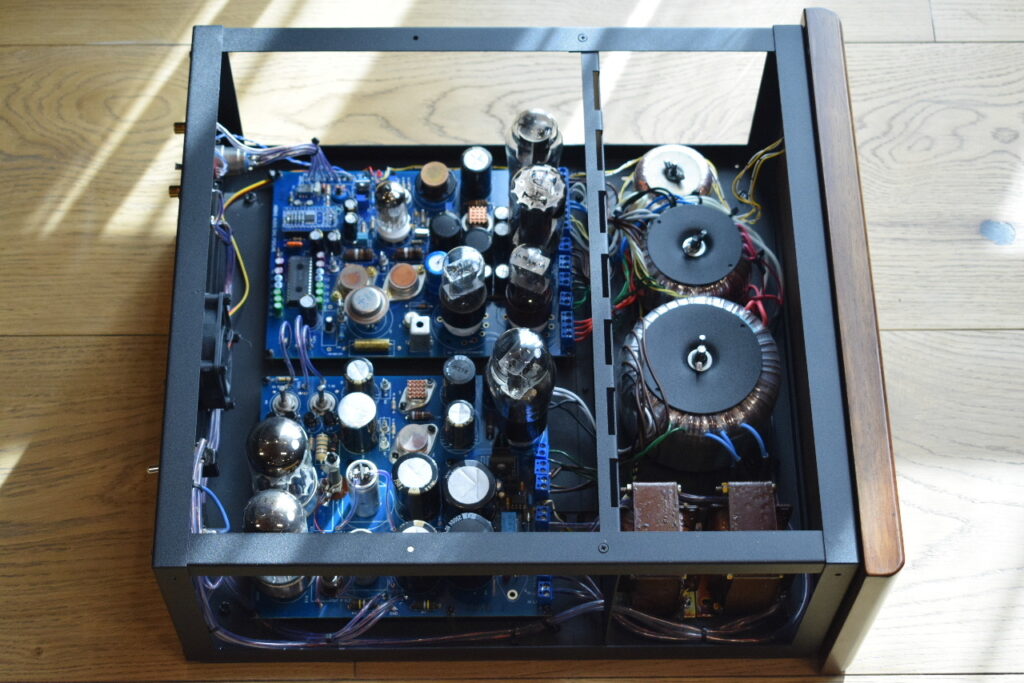
In the Psyche model, three toroidal power transformers are used: one supplies the DEM clock, the second the analog section, and the third the digital section. In the Signature version transformers are hand-made, EI type. The transformer frames are made of wood, the windings use vintage German copper wire selected for sonic characteristics, and the cores consist of German steel, most often Siemens production from the 1950s–1960s.
To illustrate the complexity of manufacturing these transformers: old German transformers must first be found, then disassembled, after which the cores are sorted according to sonic characteristics. The transformers are rewound on wooden frames, and the cores are reassembled using several grades of steel.
Modern EI transformers can easily be ordered today, for example from China. While they may have an attractive appearance with copper frames, they are sonically usually very poor, lacking the micro-detail and tonal richness associated with older materials.
The purpose of this complex transformer production process is to achieve a fundamentally different sound quality, one that differs markedly from contemporary high-end audio ideals. Enthusiasts of vintage equipment will understand this approach. The tonal richness and expressive character of reproduced music cannot be obtained from most modern components and materials. The power transformer functions as the core of the device and largely defines the sonic character of the DAC.
The current-to-voltage converter continues to be based on germanium transistors, now specifically low-noise, high-frequency devices originally developed for military applications and manufactured to high quality standards.
All voltage regulators are also based on germanium transistors. Only some of them are of the shunt type, while others are series regulators, as optimal dynamic behavior depends on the correct combination of regulator types in different parts of the circuit. Numerous devices in the market that repeat my earlier designs demonstrate that their authors do not understand why I do so. The present understanding is the result of long-term experimental work.
A non-standard Sziklai-structure regulator is also used to supply the SPDIF receiver, employing a high-power germanium PNP transistor . This approach further approximates the sonic characteristics associated with LPs playback.
One Half Rectifier circuits, common in the 1920s, continue to be used where musicality is prioritized, while Full Wave Rectifiers are applied where dynamic performance and transient response are required. Audio design does not tolerate rigid or ideological solutions. It more closely resembles jazz improvisation, where form evolves during the process to best convey the musical idea. Attempts to identify a single “best” solution and apply it universally lead to boring sound, that is commonplace in modern equipment. No solution is universally optimal, every electronic part, component, and even conductor has both advantages and limitations.
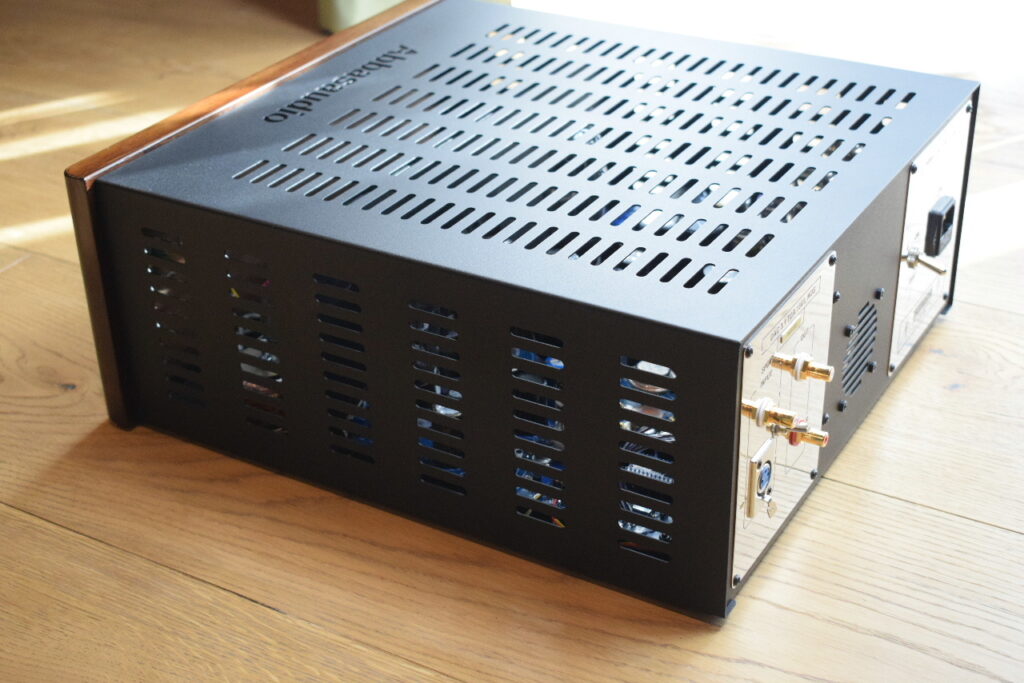
- The Psyche DAC features two SPDIF inputs, switched via a high-frequency relay:
– AES/EBU input
– RCA input - The output stage is built using 6080 power triodes, operating at an idle current of 100–120 mA, providing high dynamic capability and low output impedance without the use of negative feedback.
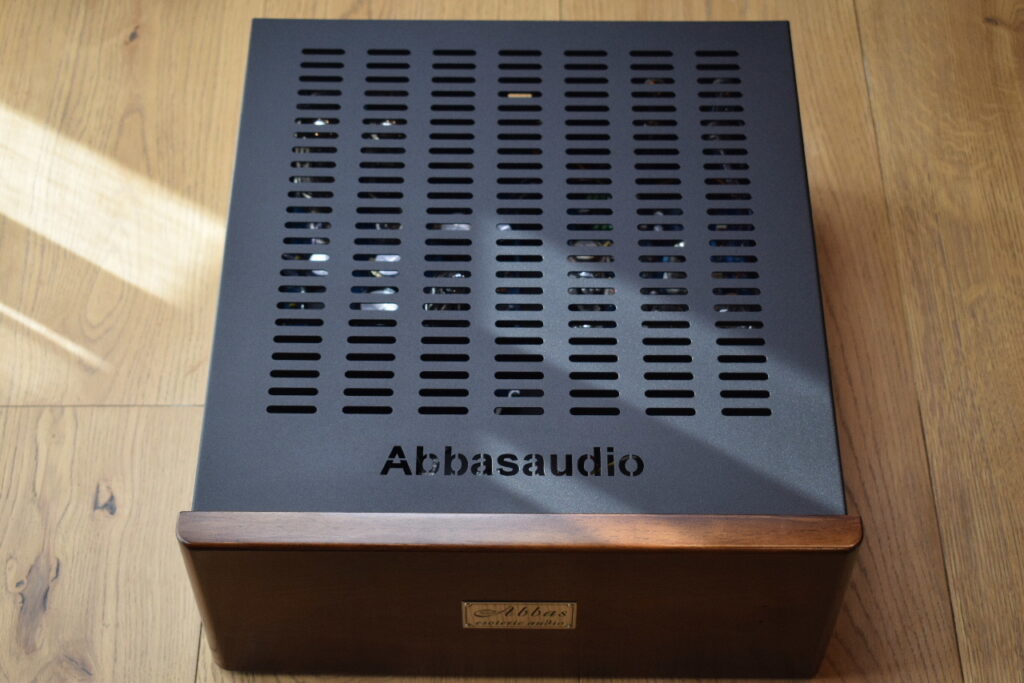
- Due to significant heat dissipation, a cooling fan is installed on the rear panel. Its rotation speed can be adjusted via potentiometer VR2 on the digital board.
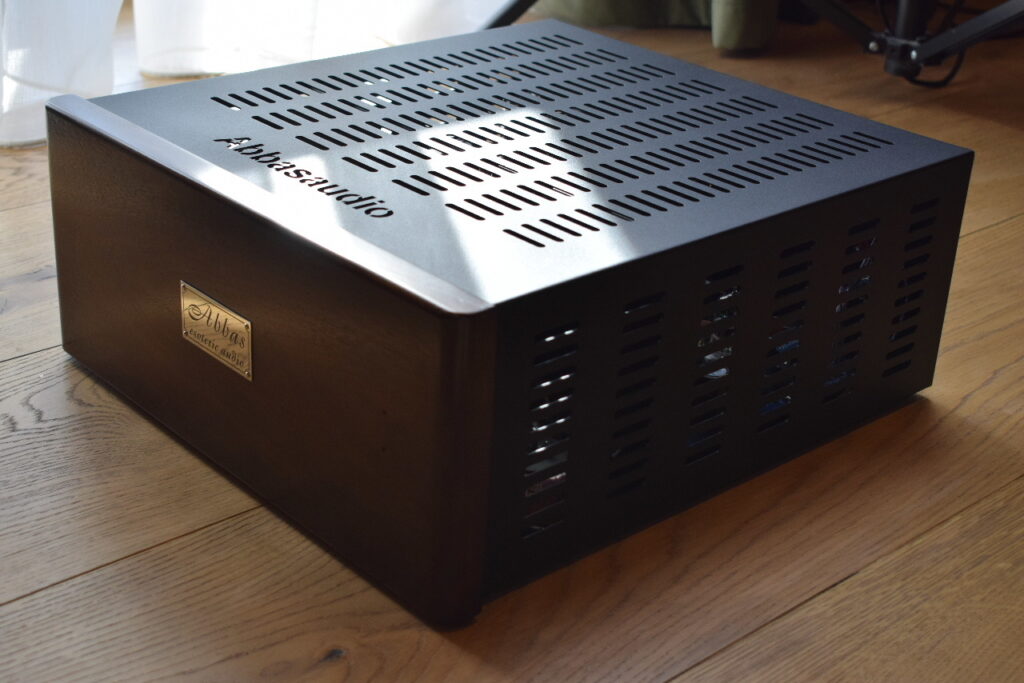
The dimensions of the unit are 440 × 400 × 170 mm, with a weight between 16 and 20 kg, depending on the version (SE or Signature).
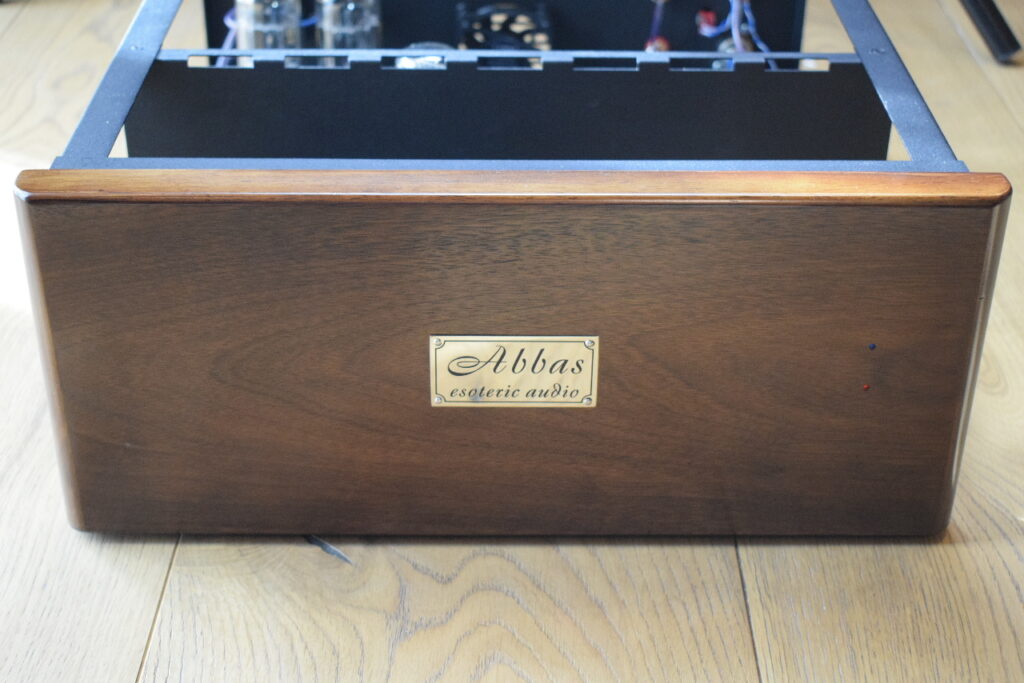
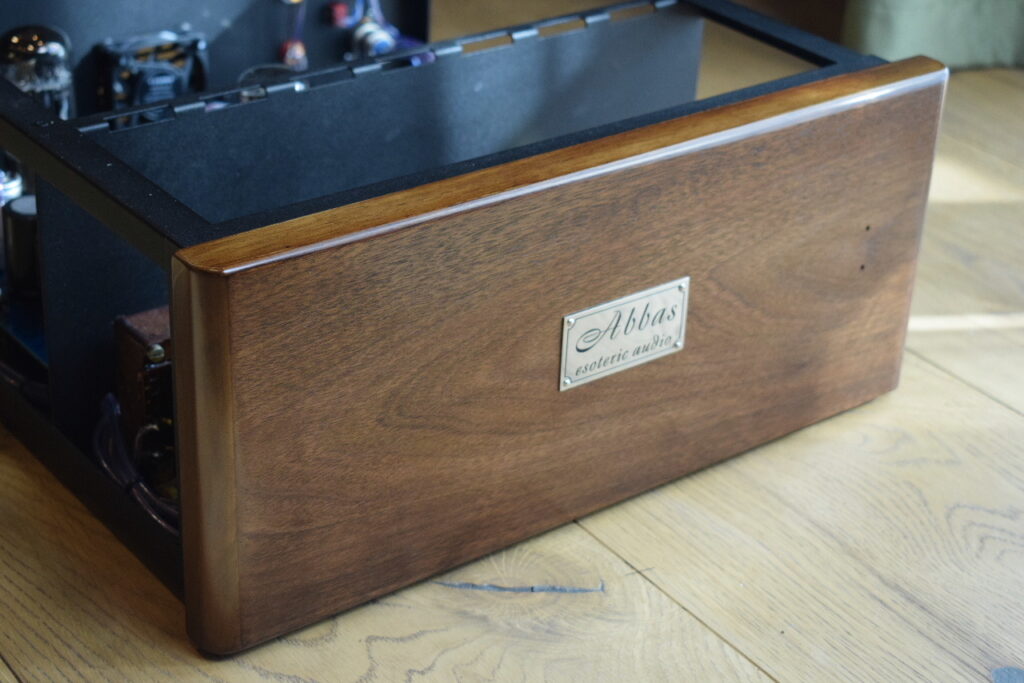
The front panel is made of walnut. The Signature version can be equipped with a marble front panel.
Overall, the sound of this version surpasses all previous implementations. At the same time, the DAC differs substantially from the digital sound standard commonly accepted in the audio community. It is unlike contemporary, technically advanced designs, even those employing tubes for stylistic reasons. Instead, it delivers a large-scale, open, and dynamic presentation with unpredictable accents, standing in clear contrast to the sterile sound and predictability of 21st-century high-end audio.
This represents the first implementation of the TDA1541 chip at this level.
Please use the Contacts page for inquiries or purchases. Such comments will not be published.